There is a terrifically cheesy TV show on TV from time to time: Tattoo Nightmares. One night last week I was home late from work, couldn't think of anything better to watch, and was astonished to be provoked into a long and complicated train of thought.
So the show itself is not very complicated.
It centers around a shop where these three tattoo artists specialise in
covering up bad tattoos. In the process - and in the spaces between torturously placed ad breaks - the stories of the acquisitions of the tattoos emerge. So in the episode the other night, there was a man who came into the shop with a
home-done bad tattoo of his friends' names on his bum - the artist
turned it into a giant, and very colourful, alligator. There was a woman with a dark cross on
her inside wrist - she got a flamenco dancer instead. There was another guy who lost a sporting bet and had to have the name of the rival team tattooed on his belly. Of course
they stretch a few clients out across a whole episode, and never show
you the final result until the very last second. The hosts are very engaging. There is quite some artistry, and substantial technical skill, in the recovery of a bad tattoo, particularly the very dark ones. It was a good night's cheesy TV.
But the hypnotic thing
about this show is the terrible stories that go with the bad tattoos.
Every one of these people seems to have been pressured or manipulated into getting
a tattoo by 'friends' or their too-powerful partner; often while drunk
or in love or very late at night; and the person who did the bad ink in the first place was
also manipulating them, and/or drunk or stoned. Over and over again.
And after years, sometimes decades, they find their way into this specialist cover-up studio on
Miami desperate to get their tattoo fixed and their life or sense of
identity back. For the intervening time, these people have been carrying around a permanent mark of one particular time their 'friend' tricked them, or forced them, into getting a tattoo. And they are so grateful to the artist who provides them with their own mark in the place of the mark where someone else marked ownership over them.
I don't know very much about tattoos. Good ones can be
spectacular. There is one woman whose son is in the same group as mine
at kinder, and she has amazing, brightly coloured art right down one arm
from shoulder to wrist. There are shops around the place, and machines, and ink colours, and different types of designs in different contexts. I would not know how to find a good place to get a tattoo done, other than going up to someone with a good one and asking them which artist they used.
But there are terrible stories too. The Nazis were notorious for using tattoos to barcode Jews, Gypsies, gays and spies. Some Nazis
collected the skins of tattooed people from the concentration camps and used them for 'study', as well as lampshades and book covers.
They targeted Gypsies, because the Romani were specialists in skin ink and marked things from the places they travelled - and Jewish law does not allow tattoos. Also disturbing is that if you search "nazi tattoo collection", Google provides page after page of bald and grouchy looking young men with swastika ink, clearly modern Nazis who indicate their membership to a larger paramilitary group by getting that ink.
There is an artist who had six pigs tattooed in some detail (they
were under general anaesthetic at the time to maintain animal welfare ) and later had them
stuffed and sold to the MONA in Tasmania. Every time I try to think too much about this, my mind slides away quickly. I wonder if you have the same reaction.
People with tattoos can't
donate blood to the blood bank, because of the risk of as-yet-unidentified pathogens transmitted by needle. After the Tattoo Nightmares stories of home tattooing, I am starting to think that this is quite a reasonable restriction.
But my big question about tattoos is - what would be worth getting?
At best, anything
meaningful enough to get tattooed at one point in a lifetime may be much
better forgotten later, or just maybe time changes, memories fade, and
it's not important anymore. At worst, for folks like Tattoo Nightmares' clients and those swastika-carrying guys mentioned earlier, when life does move on, you can't forget bad decisions, humiliation, belonging to a group which you would never want to admit to, let alone continue to remember.
The nice thing is that tattoos can be changed, although unlike the way your memory re-writes itself to make you the hero, it must be done by conscious choice. Maybe that is the fascination of Tattoo Nightmares' work.
One woman I know had a large and very detailed puma on her shoulder blade done when she was younger and in . A few
years ago she decided the puma was too aggressive and she wanted it
changed to be more middle-aged, so she went back to the same artist and
had it made sleeker and fatter, like stretching in the sun rather than
attacking. It is beautiful - and very specific to her.
This is not a photo of it, but this is also a dramatic and beautiful coverup
Some of the clients coming in to Tattoo
Nightmares have symbols or names from sporting clubs, or old love
affairs, in one case a man bought his wife a breast augmentation and she
wanted him to tattoo the new cleavage on his arm, well surprise
surprise they got divorced, and his new wife - and now his children from his new wife, and the other parents at the childcare centre -
would really prefer for the giant breasts to be covered over.
OK I admit it. That one was funny.
He got a fishing scene instead (yes a river, a fisherman and a trout on the line)!
The cover-up was even funnier.
But happily for him, it is congruent with his life stage. It will probably remain relevant to him throughout his retirement.
After looking at lots of tattoo pictures online for the last 45 minutes, I think the best way to get a tattoo is to go big, with a well-reputed artist, and preferably in a place you can't see. Go by yourself when you are sober. Take two paracetamol first. Pay good money. Go for lots of colours, or detailed black work. Don't go half-baked: really good tattoos seem to be all-out or not worth doing.
After months of sweating on this, I'm going to put a post up, mostly because I said I would, and it's stopping me from writing other things. But I don't think it is the whole picture and I don't necessarily think it is correct either. There is more terrain to cover.
After this I promise I will give slavery a rest...
...for a while.
Ready? Got your hiking boots, thinking cap, and a thermos of hot tea?
Let's go.
There are three main moral perspectives on slavery in literature, philosophy and politics.
Either:
1) Slavery as a social structure is morally justified.
Standard reasons include:
a) There is a natural human hierarchy where some are leaders and others followers, and down the continuum the of followers are the slaves. This structure is usually defined by those in power in order to keep the status-quo.
b) Slaves are specifically defective individuals from a weak genetic line. It is the moral responsibility of the (evidently superior) slave owner to prevent them from starving to death in abject poverty.
c) Slaves somehow deserve their fate, whether from being a bad person (convicted criminals used in road crews or handling heavy metals); or from evil in a previous life (hello to some 1 billion Hindus and 400 million Buddhists); or because it's just God's will that they should suffer (hi to 2 billion Muslims and up to another billion fundamentalist & sectarian Christians).
This moral argument is a dead end: a self-referential moral system that states"I'm the boss because I am better" - where 'better' is the construction of those who hold power. This has been the dominant position for the largest slabs of recorded human history. In fact, the core of the whole social structure is dominance & submission. The dominant enforce submission, to the extreme. There is no argument, no dissent - unless you wish to challenge the dominant population and thus steal their dominance - and their slaves. This is what got Abraham Lincoln into such hot water. Morally... neurochemico-morally... slavery structures are built into the core of individuals and groups who operate in this dominance & submission mode, and they cannot conceive otherwise.
Or
2) Slavery is inherently wrong.
If you read the BBC's helpfully extracted sections of the Declaration of Human Rights (1948), it tells you what is right. Slavery is not.
The Universal Declaration of Human Rights (1948) states
that "All human beings are born free and equal in dignity and rights"
(Article 1) and that "no one shall be held in slavery or servitude;
slavery and the slave trade shall be prohibited in all their forms"
(Article 4).
This argument is morally sound but pragmatically impossible, at least in the current world. The closest we have come is in long-contaminated indigeonous populations, to whom slavery simply would not have occurred. I believe Polynesians didn't go in for slavery very much. Nor did Innuit. It's a little harder to find internationally connected populations who didn't at least tolerate slavery or its continuum of appallingly-indebted-servitude. A belligerent population of Louisiana circa 1900 held it together for a while in solidarity against slavery. Scandinavia in the late 20th century also gave it a shot. And there are many others - often short-lived (less than a century) and engaged in a war (literal or trade) with slave-running neighbours.
The modern frustration with this argument is that it skates close to communism, which is still a bit on the nose after the Cold War
3) Slavery is not really morally justified on a case-by-case basis, but the overarching structure of human societal hierarchy more or less requires slavery.
To eliminate it is
a) too hard;
b) would would result in the destruction of particular valuable industries (hi to the world's 50 most powerful corporations),
c) threaten the core structure of civil society and result in anarchy and chaos (hi to anyone I've forgotten in India or China); or
d) jeopardise the personal fortunes of the very wealthy and powerful in any particular environment who hold the status quo intact. (hi to anyone in power)
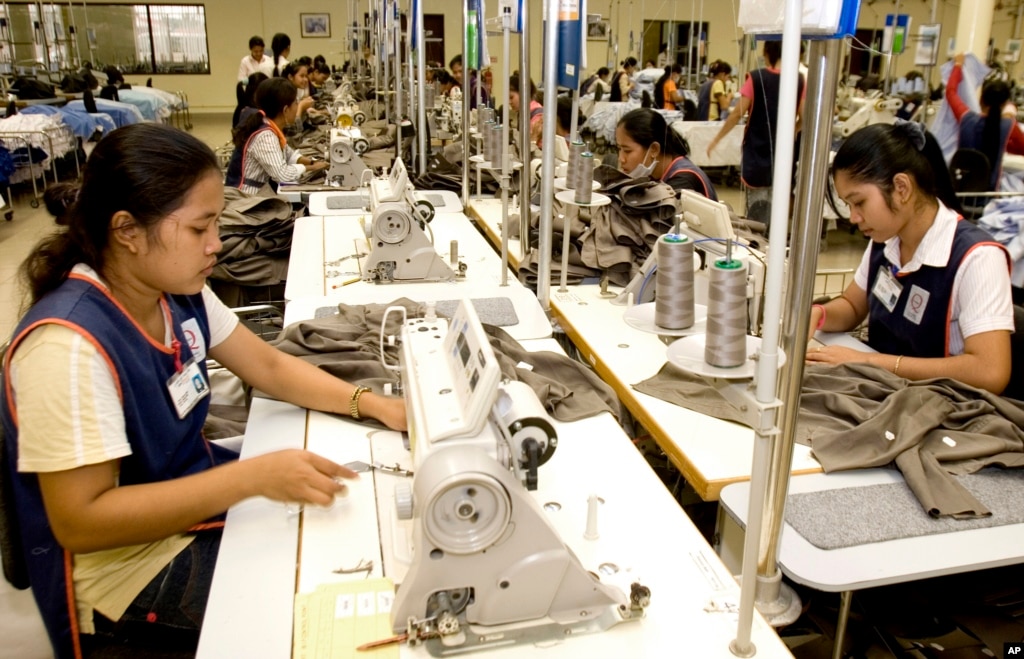
This is not a moral position, but a pragmatic one. Stick your fingers in your ears and say "Lalalalaaaaa" and maybe the problem of child shoemakers in Cambodia will go away.
Or - think about it for six months and then subject your blog readers to the first chapter of a thesis - like this!
Each of these views assume that there are degrees of freedom to human actions, which may not be there due to a particular type of framing.
I am particularly interested in the idea of distasteful but pragmatic slavery.
In my last post, I skimmed over how slavery has had - and continues to have - untold economic and technological benefits over the last 500 years. It has been core to trade and development. Many brilliant economists have also noticed this. I will only touch on the work of two. Then I promise I will get to the point.
Economist 1: Michael Spence: Five Steps from Slavery to Corpulence
Michael Spence won the 2001 Nobel prize for economics for his theory about globalisation and manufacturing.One part of his proposal was that a nation's production profile identifies
its place in a nice clear sequence of 'economic development'. In other
words, the stuff a country makes can tell you its progress on the path
from the Dark Ages to the Cyber Age. Here's a summary - assuming the
absence of war and corrupt totalitarian regimes, of course.
Remote rural subsistence populations live in
the most abject poverty of all. If for some reason, cholera and malaria
start to recede and children start surviving, these areas become more
and more populous.
Manual-labour-intensive global manufacturing
companies set up factories (or opaquely-owned subsidiaries with
factories) in places where people live in overpopulated abject poverty.
People work in sweatshops for 18 hours a day, making shoes and soccer
balls and clothes. Children are preferred workers because they do fine
hand-work. This triggers the companies to build shipping and transport
infrastructure, to get the goods out of the production zone.
Bit by bit, along with infrastructure growth,
the production systems get more sophisticated. Light industry develops:
toy manufacturing and plastics extrusion. Automotive manufacturing moves
in at this stage. More jobs are available; prosperity increases; a
local demand for some goods arises (people can finally buy themselves
shoes!). Workers might unionise a bit. The garment companies are gradually
pushed out.
Some time later, as local demand starts to gain
momentum, and visitors start coming, the physical environment gets
cleaned up. Sewerage and stormwater systems are built. Chidren can stop
working and go to school instead. Service industries flourish
(restaurants, nail parlours, tourism) and retail becomes a substantial
segment of the economy.
Later again, technology and finance picks up.
Bit by bit, all manual manufacturing gets pushed out. The area becomes a
net consumer. We call it "Developed" or "First World". People get fat
and aspire to be investment bankers.
Spence's argument
says that Europe and America accomplished this progression during the
400 years of Triangular Trade. Post WW2, Asian nations are being watched
for how they develop. Nations which started early with garment
manufacture (Hong Kong, Singapore, Japan) progressed to cars within 30
years, and after another 20 years are now technological and financial
powerhouses. Vietnam started later. Now it is losing its garment
industry but is established a tourist destination and a car
manufacturing centre. Bangladesh, which was a warring mess until about
the 1980's, now has a strong garment industry. Both are developing on a
much faster timeline. They are 'converging' on the established Asian
centres.
(I have to
mention China but it doesn't really fit. It is a multispeed and
non-transparent complex entity in its own right, with both cyber-age and
dark-age sections present in a single city at any given time. Even so,
there seems to be convergence: there are very poor communities
progressing through the steps above faster than their 1990s predecessors
did.)
Now that Vietnam
is progressing towards labour laws, it's the Bangladeshi garment workers
who live like slaves. When they eventually start to buy shoes and possibly unionise, presumably more sweatshops will move to Turkmenistan, Nepal,
or any of the more politically stable and less corrupt nations in the bottom
third of this list. Here's the rub.
This story requires that the rejected industries go somewhere else to abuse human beings.
(One perspective
is that it's an improvement for poor people in the rural subsistence or
immediately-post-violent-totalitarian-regime locations where these
labour-intensive industrues go. A sweatshop job is a good one. The pay reliably prevents starvation. Sitting on my couch in my comfortable modern house, I am
not in a position to comment.)
Economist 2: Piles of Money Just Want to Get Bigger
Earlier this year, a French economist called Thomas Pikkety published a book which has had the political-economic world shaking in its
boots a little. He apparently started out looking for data from the 20th century
to empirically support either communism or capitalist democracy - and found neither.
What he found is that capital (ie a pile of money) would normally just
accumulate (i.e. the rich just get richer, and the gap between rich and
poor just gets bigger and bigger) unless disrupted by an external force.
The two forces he found are arbitrary redistribution (e.g. World War 2)
or rampant and largely chaotic economic growth, in which Old Money can fall, and New Money can grow to a noticeable size (e.g. 1975 - 2008). After thousands of pages, Pikkety very gently almost-proposes
that the most fair, equitable, humane, reasonable thing to put into
policy, for the sake of the 5 billion really poor people on this earth,
is to globally, unilaterally, and very heavily, tax the outrageous wealth of the
2 to 20 million very rich and redistribute it to everyone else.
I
- like probably every other curious and loosely political person in the English and French speaking worlds - am planning to read it sometime in order to be up-to-date. It
has the same transformative vibe Das Kapital or Mao's
Little Red Book.
Pikkerty's book was good timing for the quality of socio-political discussion, which had been deteriorating. He proposes
that our close-held or much-reviled political ideologies are, and always has been, profoundly empirically wrong (in the style of "Hey, cutting off your earlobe might prevent
insomnia").
What if something else is actually behind the emergence and persistence of global slavery?
Earlier in this post, you may have noticed the following fragments dropped and left behind. I will pick them up, and put this out there without any cross-references, and say my thought. (Someone else may have said this but I haven't found them.)
I propose that slavery is not an action, it's not a choice, it's not a degree of freedom for anyone participating. Slavery is a symptom of a flawed framing system.
Slavery is an emergent property of the complex global socioeconomic systems which pre-eminate property, capital and power. Where you have
standard dominance-and-submission modes of human relationships, and
financial wealth is key to being dominant,
then slavery or de-facto slavery will eventually emerge.
Earlier I said:
"The core of the whole social structure [surrounding, permitting and proliferating slavery] is dominance & submission."
"This argument [that slavery is fundamentally wrong] is morally sound but pragmatically impossible"
"[Spence places slavery in]....a nice clear sequence of 'economic development'"
"[Pikkety's model] really peeved the hard-line capitalist folk..."
My last post proposed that income inequality is broadly equivalent to slavery,
and that we (ie anyone who has time and resources to read this blog) are
benefiting from the fruits of that long-distance slavery.
I pored over this and looked for examples and counter-examples at any scale. I picked one of each here. My referencing is weak again. Sorry.
Since the 1970s, anthropology has been describing some leftover indigenous
cultures globally which have quite different framings for property and
capital.
An anthropologist-adventure writer went on an adventure horseride
among Mongolian tribes, and described in detail the rules around
property, and these rules keep propertly 'loose' rather than 'tight'. I
wish i could find the name of the book but I can't.
When you meet a stranger or a neighbour and they give you a gift,
you need to return an equivalent gift, because being in debt to anyone
is too heavy a burden to carry.
If a stranger asks you for something that you have, you give it,
because they would not ask if they didn't need it. Likewise if you see
that somebody needs something (especially food, water, shelter,
healthcare for them or their animals), you give freely without being
asked.
There is no word for thankyou. If it was a trade, both sides are
happy and nobody is in debt. If it was a gift, next winter you may be
the one needing help.
There's not much point in large amounts of property anyway, because the Mongolian tribespeople are almost all nomadic.
One who takes too much - ie needs too much help - is feeble-minded
and a bit pathetic. Townspeople, landowners, and people who cannot move
because they have too much stuff, are more like plants than people.
Anthropologists and Aboriginal elders have been trying to explain their framing of property and time for many decades. I love reading this stuff too. (Hey, I love reading most stuff.)
People belong to land, not vice-versa.
Personal
property is not a useful construct. If you need something, you take it
and carry it until you don't need it, then you put it down. No point
carrying extra weight when moving a nomadic camp.
Tribal
territory is marked by water catchment, and authority is shared between
tribes the benefit of the land, not the convenience of the human beings.
The waterway is the core of the land, not the boundary. Much to my
delight,Victoria's contemporary waterway management is returning to this
framework.
Objects hold impermanent value. When people are hungry, food is extremely valuable, and trade habits reflect this
Time
is not necessarily chronological, but based around episodes, stories,
and patterns of things which happened in what we think of as the past
and may or may not be repeated in what we think of as the present. (l
did tell you that you'd need hiking boots and a thermos and a thermos of tea!). In
language, chronology is a bit silly because the story is the story. If
you are living a story (eg. angry childhood, or excessive generosity to
neighbours, or adultery, or war) then you know how it is going to end.
Might not be you, might be your kin. Everyone knows the story. Dreamtime
isn't ancient legends, or the equivalent of Christian parables, or
fairytales, it's a roadmap through the present. And stories of
greediness or running slaves do not normally have a good ending.
While English-speaking "society" seems very homogeneous when moral philosophers, marketers or talkback radio participants start talking, there is enormous diversity between human beings and between families of human beings. Family lines hold patterns about framing and human behaviour, and I've been fascinated with them for a little while. I can't reference this except what is already in the public domain because this is some reasonably distasteful stuff about actual human beings.
At the small scale, there are some families where being rich is very important: part of their framing, part of their meaning. Within the family, wealth is your measure of success, and your place in the hierarchy. Surprisingly often in these families, there is one family member or branch which never 'made it', and sometimes that family member ends up on the slavery continuum, serving the others. She (because it's most often a wife or a daughter) might bring food around to the elderly parents-in-law every day, and she will be relentlessly criticized and humiliated every time. She may be made to do the cleaning where the paid cleaner failed, she may be a childcarer, she will almost certainly burn energy running errands. She may be physically abused, and will certainly be verbally and emotionally abused. The family keeps it all secret - except when, for example, the court case goes public, or a golf caddy dies or a victim speaks out These families also employ paid workers: maids, nannies, drivers etc. The rich and dominant do not normally abuse their employees in anything like the same way. The slave's only way out is to become rich in her own right. This is rare. If she does get to be rich, she will dominate and abuse the next generation's 'failure'. Poor and middle-class families with dominance-and-submission frameworks of relationship may also hide a slave. They also do horrible things. These do not always make it to the papers. This problem is not found in families where relationships are based on frameworks other than dominance. (They have other patterns of problems.)
So, smartypants, what's the way out? How can we re-frame slavery out of the world?
Here's my plan. I don't know if it will work. I don't think many people will follow me except those who are already doing this.
1) Don't pre-eminate wealth or property.
Find some other construct which is more important than wealth or property. Examples include:
Aesthetics and refinement (art, design, music, food, sculpture, the breeding of koi or the discussion of lost time in six epic volumes.) Such people and families rarely go in for full-scale slavery.
Honour and pride -> risky because pride is quite close to superiority, which is dominance's half-sibling.
Duty, responsibility, your sacred task to another vulnerable entity.
Virtue and goodness -> also risky, also close to superiority. Might need to temper virtue with modestly.
A specific multi-generational task, such as holding onto ethnicity or religious identity. If belonging and being 'who you are' is a lot of effort, wealth can be important but this task is pre-eminent. (hi to busy religions such as Mormons, observant Jews, anyone who's done a Hajj, and eco-warriors protecting forests and oceans and such. Good plan, by the way.)
Something random, like dragging giant statues across an island to look out over the water. (I have been wanting to use Carl's experiment in a blog post for ages! This is my excuse!)
2) Don't get sucked into dominance and submission. Don't obsess with promotions. Don't go into competition with the Joneses next door. Don't strut past the homeless guy, feeling too important to look down at him. Spot the feelings of superiority and inferiority creeping into your brain, and step on them them with the hiking boots that you're probably still wearing.
You can take the boots off now, by the way. I'm done. Got nuthin' else. My writing-about-slavery tank is empty.
As I said at the start, I don't necessarily think I'm correct and I know this is not the whole picture. I hope it was a little food for thought, though.
Before the promised post on 'Slavery Part 3 - Morality is
Complicated' I have a compelling thought and so will take you on a
detour on the subject of building on top of bones.
I
posted a little while ago a thought on cemetaries,; essentially that a
cemetary is a good thing. It's a sign of a safe, well-resourced community where we have a
dedicated place to celebrate the dead. Here is another story about a
cemetary; symbolically far less safe but utterly dedicated.
Members of my family have just come back from Hiroshima, and they brought back stories.
It would give me great honour to take you on a virtual stroll through two particular cemetaries in Hiroshima.
On the 6th of August, 1945, a uranium bomb with a yield of 16
kilotons was dropped and detonated at an altitude of 600m, just to the east of the T-bridge in the central city.
There
are green spaces in the middle of the modern city, marked Hiroshima Peace Memorial Park and Central Park. You
might guess that this is because it was previously reduced to rubble. You would be
wrong.
In the <1km range, rubble is not an accurate
description. There was a melted-matter slurry, where wood and stone and
ceramic was fused with human flesh and clothing and hair. In the
Hiroshima Museum, there are pieces of this slurry.
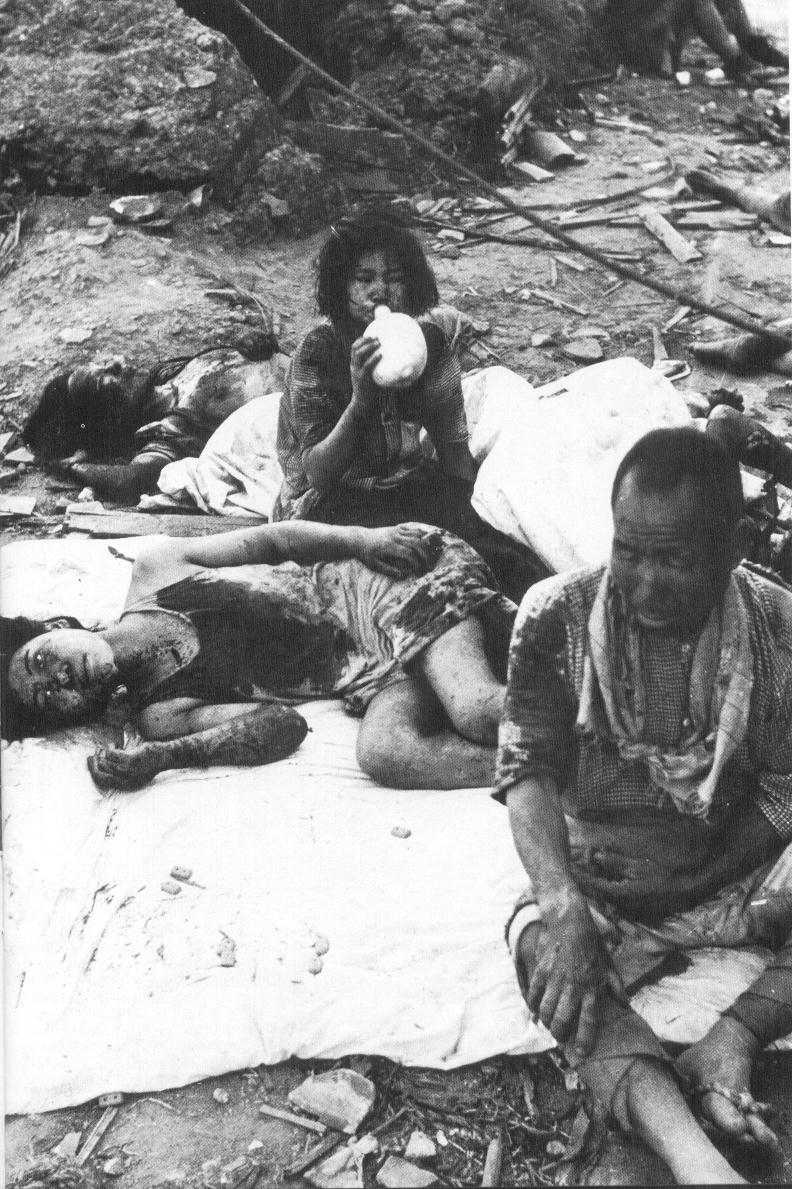
There were some
survivors - for a little while. Burns were horrific, skin peeled off in
ribbons. Often their clothes and posessions were fused to their bodies,
and their hair had melted. Some were caught in the wreckage. Fires took
hold very quickly and everyone who could leave, did so.
In
the first few weeks there were few photographers, and very few
non-Japanese witnesses or aid workers in the first two weeks. Later,
some drew pictures. I am not easily disturbed but this is distubring. I
am holding my breath as I am typing this, having found and read the stories under these pictures. You will notice I haven't included the pictures here. You can decide to follow the link, or not, for yourself.
Makeshift hospitals were set up at various places in the city. American military doctors arrived with orders to take notes on
the effect of radiation sickness for military research - because it was
presumably interesting to the CIA, and there was not much else they
could do for the victims. Shinto burial is traditionally done by cremation, but this quickly became impossible. Corpses were stacked in the area of the Peace Park, and at various places throughout the city - quantities of human bones and skulls are periodically found, even very recently.
In
the 2-5km range, most structures survived but city infrastructure (eg.
sewage, food, fresh water, roads) collapsed. Systemic radiation
illnesses abounded. Survivors suffered a high incidence of leukemia,
thyroid illness (cancer and autoimmune), A-bomb cataracts, other cancers
(breast, lungs, salivary glands), high incidence of infertility for
pubescent girls at the time of the blast, high incidence of birth
defects, including mental retardation, for women pregnant at the time
of, or in the year following the blast, plus, of course, disfiguring
keloid scars.
Total casualty estimates are hard to determine.
The Peace Park lists 130,000 dead in the blast, or wounded to die
during the following week, and 50,000 dead over time as a consequence of
injuries or illness
from the blast. This is not a clean number. Deaths from cancer, thyroid
and autoimmune disease throughout the last 50 years are measured higher
in the Hiroshima area - but bomb survivors sometimes live into their
80's and 90's. And how do you count the effect of trauma, depression and
PTSD, in a culture in which honourable suicide is not traditionally a
problem?
Neither Hiroshima nor Nagasaki has elevated background radiation.
The blast was airborne, so most of the remaining radioactive isotopes
dissipated into the fallout and the atmosphere quite quickly. and
surface contamination turned out to be minor. Additionally, many of the
residual radioactivse isotopes had very short half-lives, decaying
quickly. Current Hiroshima and Nagasaki hospitals have the same
levels of radiation-related illness as the rest of Japan, and most of
the world.
Bomb survivors (called Hibakusha)
still suffer discrimination because of their disfigurement, and cruel
rumours of contagious illness or inherited mutations. Children of
Hibakusha can also be victims of discrimination. The Hibakusha are much
older now, but they still actively and vociferously campaign against nuclear proliferation, and for stronger anti-discrimination legislation. Every year on the anniversaries of the Bombs, those Hibakusha who died during the last year have their names added to the books of the Hiroshima and Nagasaki dead.
Hiroshima survivor Sumiteru Taniguchi in 2004
Memorial Spaces in the Central City
The Peace Park
and the Central Park were created by bringing in large quantities of
soil to bury the smelted remains of the city.
The dome was famously left standing because it was directly under the blast and missed the destructive horizontal shockwave - it has been conserved, but not restored. Mature trees were
transplanted into the centre of the city during reconstruction, and this was
pioneering horticulture at the time. The central city is now green and
modern; people go to work and fret about romance and eat lunch and laugh
about the latest internet meme the way we do in every other city - but with
possibly a hundred thousand ghosts in the soil under their feet.
When Mother Teresa visited the Peace Park in 1984,
apparently she took her shoes off on arrival and walked barefoot,
explaining to her entourage that she was walking on holy ground.
There
are shrines and sculptures and memorials right through the Peace Park.
In the Peace Museum, you can read messages from people who survived the Bomb,
and people who visited the memorial.
The iconic
photographs are of the memorial dome, the singed but intact watch
stopped at 8:15AM, the child's bicycle, and the poem about the
dragonfly:
but this one also touched me:
the shadow of a person on a step from near the blast. This person left
no body - just a few million atoms pressure-sprayed into the rock, as
the rest vaporised.
Green spaces outside the blast zone
So
after the intense experience of the Peace Park and Museum, my family
retreated to the serenity of the Shukki-En Garden. The pictures
apparently don't capture the living energy of this place. They sat under
a tree, breathed the clean air, and watched the koi.
The
guide then explained that in the weeks after the bomb, 20,000 people -
severe burn and radiation victims - had also retreated up here, carrying
family members and the bodies of their children, or looking for their
children - because clean water was still available up here and it was a
serene place to die. Nobody removed the corpses. Their bones are still
here, under the younger trees and the lawn.
Names are Often Recorded in the Cemetary.
There are books of names.
On
the day my family was there, a memorial ceremony was being conducted.
One man and two women were kneeling on the step of one of the memorials,
methodically and silently turning the pages of books in the measured
graceful style of the Japanese. There were about 150 books, bound in patterned paper, of around 500 pages each. Each page was crowded with names written in Kanji. A bank of schoolchildren and a few bystanders were sitting and watching
The
guide explained that this was the list of the known dead - those
missing or dead in the blast, those dead from radiation sickness, and
each year the long-tem survivors who died from any cause of death are
added to the list too. Each name sees the light and the air once a
year. The names were not read aloud. Turning the pages takes three
people most of the day.
1) A person legally owned by another and having no freedom of action or right to property
2) A person who is forced to work for another against his will
3) (fig) A person under the domination of another person or some habit or influence: a slave to television
4) A person who works in harsh conditions for low pay
5) a. A device that is controlled by or that duplicates the action of another similar device (the master device)
b. (as modifier): slave cylinder
Origin: via Old French from Medieval Latin Sclavus a Slav, one held in bondage (from the fact that Slavonic races were frequently conquered in the Middle Ages), from Late Greek Sklabos a Slav In
current Western philosophy and literature and popular commentary, any form of slavery is considered to be, and to have always been, a Very
Bad Thing, and now, happily, it's been completely eradicated, thanks
largely to the Americans following the Civil War.
Both parts of this statement are untrue.
Slavery comes in many forms, and while most of them are morally
indigestible, slavery is generally pretty good for the slave owners
(from whom most of us descend at some point), and not all types of slavery are bad for
the slaves*. There is a 2001-Nobel-prize winning model of economic
development which argues that more-or-less-slavery is more-or-less
responsible for modern life. which I will get to in due course, possibly in the next post because this one has taken me so long.
Slavery has not been eradicated. True slavery - being legally owned
by another human being and forced to work for no pay - is a normal
condition of marriage for many of the world's women due to tradition, religion, or circumstance; and is part of normal
life for most children in the developing world, and much of the rural and
urban poor globally. We - those with computers and the leisure time to
sit and read blogs on the internet - know this but deliberately and carefully forget
it. We also deliberately forget that we benefit quite nicely from this
in our day-to-day life. Furthermore, by the loose definition - working in harsh
conditions for low pay - many of us have access to slave-type labour for
our own benefit.
*"WHAT!" I hear you say. "You're so wrong! Slavery is always bad
for the slaves!" Now hangonatic. You've followed me through several
counter-intuitive ideas over the last few years. Give this one a chance
too.