Thursday, 29 May 2014

Built on Bones - Don't Ever Forget Hiroshima and Nagasaki

Before the promised post on 'Slavery Part 3 - Morality is Complicated' I have a compelling thought and so will take you on a detour on the subject of building on top of bones.

I posted a little while ago a thought on cemetaries,; essentially that a cemetary is a good thing. It's a sign of a safe, well-resourced community where we have a dedicated place to celebrate the dead. Here is another story about a cemetary; symbolically far less safe but utterly dedicated.

Members of my family have just come back from Hiroshima, and they brought back stories.

It would give me great honour to take you on a virtual stroll through two particular cemetaries in Hiroshima.


On the 6th of August, 1945, a uranium bomb with a yield of 16 kilotons was dropped and detonated at an altitude of 600m, just to the east of the T-bridge in the central city.
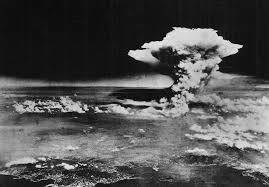
Here is a blast map from 1945, sourced from here.


Hiroshima Damage Map

Here is a modern Google map of central Hiroshima.


There are green spaces in the middle of the modern city, marked Hiroshima Peace Memorial Park and Central Park. You might guess that this is because it was previously reduced to rubble. You would be wrong.

In the <1km range, rubble is not an accurate description. There was a melted-matter slurry, where wood and stone and ceramic was fused with human flesh and clothing and hair. In the Hiroshima Museum, there are pieces of this slurry.


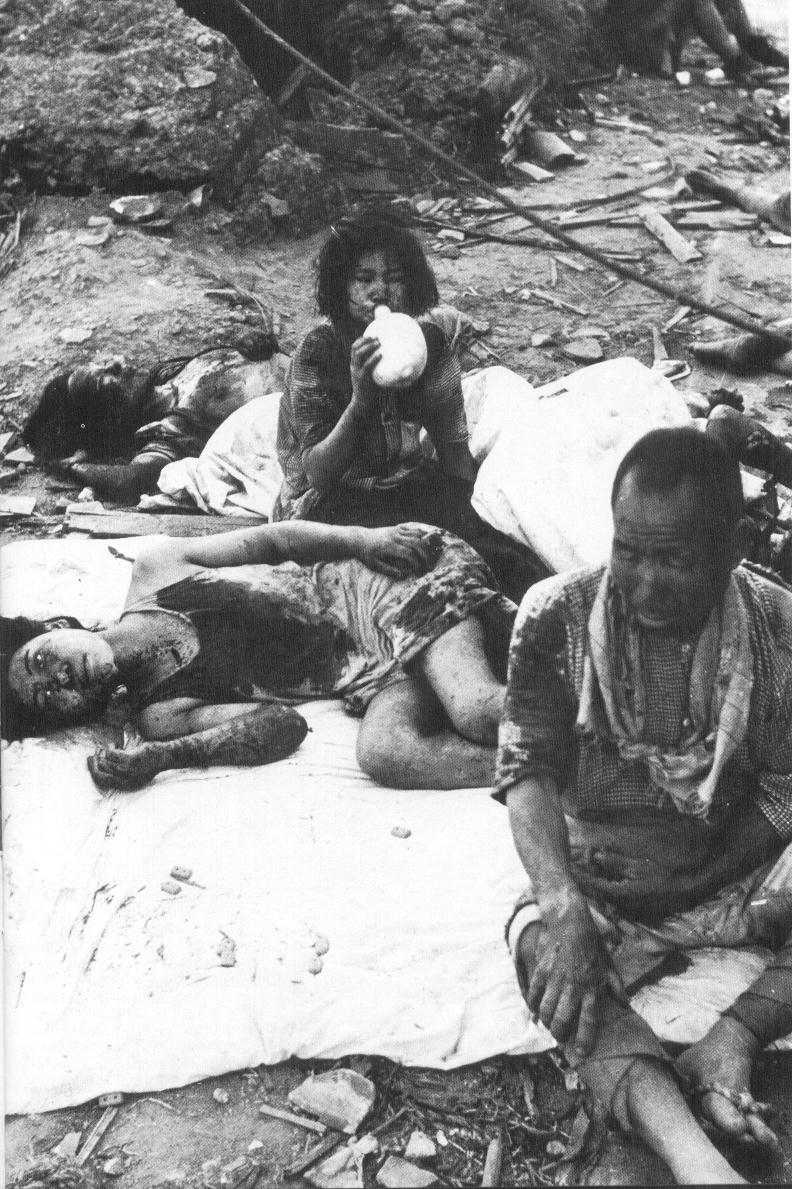
There were some survivors - for a little while. Burns were horrific, skin peeled off in ribbons. Often their clothes and posessions were fused to their bodies, and their hair had melted. Some were caught in the wreckage. Fires took hold very quickly and everyone who could leave, did so.

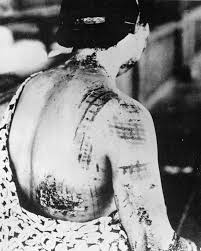


In the first few weeks there were few photographers, and very few non-Japanese witnesses or aid workers in the first two weeks. Later, some drew pictures. I am not easily disturbed but this is distubring. I am holding my breath as I am typing this, having found and read the stories under these pictures. You will notice I haven't included the pictures here. You can decide to follow the link, or not, for yourself.

Makeshift hospitals were set up at various places in the city. American military doctors arrived with orders to take notes on the effect of radiation sickness for military research - because it was presumably interesting to the CIA, and there was not much else they could do for the victims. Shinto burial is traditionally done by cremation, but this quickly became impossible. Corpses were stacked in the area of the Peace Park, and at various places throughout the city - quantities of human bones and skulls are periodically found, even very recently. 


In the 2-5km range, most structures survived but city infrastructure (eg. sewage, food, fresh water, roads) collapsed. Systemic radiation illnesses abounded. Survivors suffered a high incidence of leukemia, thyroid illness (cancer and autoimmune), A-bomb cataracts, other cancers (breast, lungs, salivary glands), high incidence of infertility for pubescent girls at the time of the blast, high incidence of birth defects, including mental retardation, for women pregnant at the time of, or in the year following the blast, plus, of course, disfiguring keloid scars.

Total casualty estimates are hard to determine. The Peace Park lists 130,000 dead in the blast, or wounded to die during the following week, and 50,000 dead over time as a consequence of injuries or illness from the blast. This is not a clean number. Deaths from cancer, thyroid and autoimmune disease throughout the last 50 years are measured higher in the Hiroshima area - but bomb survivors sometimes live into their 80's and 90's. And how do you count the effect of trauma, depression and PTSD, in a culture in which honourable suicide is not traditionally a problem?

Neither Hiroshima nor Nagasaki has elevated background radiation. The blast was airborne, so most of the remaining radioactive isotopes dissipated into the fallout and the atmosphere quite quickly. and surface contamination turned out to be minor. Additionally, many of the residual radioactivse isotopes had very short half-lives, decaying quickly. Current Hiroshima and Nagasaki hospitals have the same levels of radiation-related illness as the rest of Japan, and most of the world.
Bomb survivors (called Hibakusha) still suffer discrimination because of their disfigurement, and cruel rumours of contagious illness or inherited mutations. Children of Hibakusha can also be victims of discrimination. The Hibakusha are much older now, but they still actively and vociferously campaign against nuclear proliferation, and for stronger anti-discrimination legislation. Every year on the anniversaries of the Bombs, those Hibakusha who died during the last year have their names added to the books of the Hiroshima and Nagasaki dead.

Hiroshima survivor Sumiteru Taniguchi in 2004

Memorial Spaces in the Central City

The Peace Park and the Central Park were created by bringing in large quantities of soil to bury the smelted remains of the city.

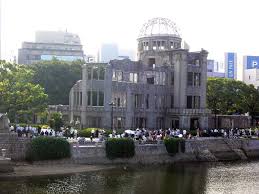
The dome was famously left standing because it was directly under the blast and missed the destructive horizontal shockwave - it has been conserved, but not restored. Mature trees were transplanted into the centre of the city during reconstruction, and this was pioneering horticulture at the time. The central city is now green and modern; people go to work and fret about romance and eat lunch and laugh about the latest internet meme the way we do in every other city - but with possibly a hundred thousand ghosts in the soil under their feet.


When Mother Teresa visited the Peace Park in 1984, apparently she took her shoes off on arrival and walked barefoot, explaining to her entourage that she was walking on holy ground.

There are shrines and sculptures and memorials right through the Peace Park. In the Peace Museum, you can read messages from people who survived the Bomb, and people who visited the memorial.

The iconic photographs are of the memorial dome, the singed but intact watch stopped at 8:15AM, the child's bicycle, and the poem about the dragonfly:


but this one also touched me: the shadow of a person on a step from near the blast. This person left no body - just a few million atoms pressure-sprayed into the rock, as the rest vaporised.


Green spaces outside the blast zone

So after the intense experience of the Peace Park and Museum, my family retreated to the serenity of the Shukki-En Garden. The pictures apparently don't capture the living energy of this place. They sat under a tree, breathed the clean air, and watched the koi.


The guide then explained that in the weeks after the bomb, 20,000 people - severe burn and radiation victims - had also retreated up here, carrying family members and the bodies of their children, or looking for their children - because clean water was still available up here and it was a serene place to die. Nobody removed the corpses. Their bones are still here, under the younger trees and the lawn.


Names are Often Recorded in the Cemetary.

There are books of names. 
On the day my family was there, a memorial ceremony was being conducted. One man and two women were kneeling on the step of one of the memorials, methodically and silently turning the pages of books in the measured graceful style of the Japanese. There were about 150 books, bound in patterned paper, of around 500 pages each. Each page was crowded with names written in Kanji. A bank of schoolchildren and a few bystanders were sitting and watching
The guide explained that this was the list of the known dead - those missing or dead in the blast, those dead from radiation sickness, and each year the long-tem survivors who died from any cause of death are added to the list too.  Each name sees the light and the air once a year. The names were not read aloud. Turning the pages takes three people most of the day.

Friday, 16 May 2014

Slavery Part 2: The 21st Century is Built on Bones

Slave (slerv) - n

1) A person legally owned by another and having no freedom of action or right to property
2) A person who is forced to work for another against his will
3) (fig) A person under the domination of another person or some habit or influence: a slave to television

4) A person who works in harsh conditions for low pay
5) a. A device that is controlled by or that duplicates the action of another similar device (the master device)
    b. (as modifier): slave cylinder

Origin: via Old French from Medieval Latin Sclavus  a Slav, one held in bondage (from the fact that Slavonic races were frequently conquered in the Middle Ages), from Late Greek Sklabos a Slav
In current Western philosophy and literature and popular commentary, any form of slavery is considered to be, and to have always been, a Very Bad Thing, and now, happily, it's been completely eradicated, thanks largely to the Americans following the Civil War. 

Both parts of this statement are untrue.
  • Slavery comes in many forms, and while most of them are morally indigestible, slavery is generally pretty good for the slave owners (from whom most of us descend at some point), and not all types of slavery are bad for the slaves*. There is a 2001-Nobel-prize winning model of economic development which argues that more-or-less-slavery is more-or-less responsible for modern life. which I will get to in due course, possibly in the next post because this one has taken me so long.
  • Slavery has not been eradicated. True slavery - being legally owned by another human being and forced to work for no pay - is a normal condition of marriage for many of the world's women due to tradition, religion, or circumstance; and is part of normal life for most children in the developing world, and much of the rural and urban poor globally. We - those with computers and the leisure time to sit and read blogs on the internet - know this but deliberately and carefully forget it. We also deliberately forget that we benefit quite nicely from this in our day-to-day life. Furthermore, by the loose definition - working in harsh conditions for low pay - many of us have access to slave-type labour for our own benefit.
*"WHAT!" I hear you say. "You're so wrong! Slavery is always bad for the slaves!" Now hangonatic. You've followed me through several counter-intuitive ideas over the last few years. Give this one a chance too.

Saturday, 19 April 2014

Slavery and Exploration


My children love the TV cartoon series "Octonauts". They are a collection of ocean explorers/ adventure heroes who live on a submarine called the Octopod, and undertake missions generally involving one real marine/aquatic species at a time, and something to do with their Mission Statement: "Explore - Rescue - Protect".

It's nice - boppy music, nothing violent, and now my kids have a reasonably comprehensive knowledge and fired-up curiosity about cone snails, gulper eels, triggerfish, several species of whale and of shark, various crustaceans, the Amazon River, and deep-ocean topographic features like trenches, hydrothermal vents etc. It does make their teachers a little bit crazy with their level of smartypants marine science knowledge.

One thing about this TV show has made me very uneasy for some time. I suspect all the domestic work on the Octopod is done by slaves.

Octonauts as Slave Owners

  • I put it to you that the Vegimals (see that little yellow-headed fellow to the bottom left of that first picture, just above the Octonauts logo?) are the quintissential slave race. As explained in the episode 'A Very Vegimal Christmas' (which you don't have to watch unless curious about brine lakes and marine mucelage):
  •     The Vegimals were brought into the Octopod in infancy, separated from their previous environment, and taught to serve the Octonauts.
  •     They perform menial and service jobs, and are not paid for their labour (well, to be fair, financial renumeration of any kind is never discussed)
  •     They are all but invisible the bulk of the time, they are not acknowledged by any plot device in any episode until roughly the end of the 2nd season, and this episode at the end of the 3rd season is the very first one in which they feature significantly.
  •     Their leader - Tunip - is almost afforded the lowest-raking crew position, but not quite. This is a classic slave control tactic. He is Malcolm X's House Negro
  •     Many of them have no names. A Wiki I found has a list of 16 vegimals but only 8 are in the episode. Some - like Wallabaga, Charchard, and Salapeno have never ever been named or even seen on the series (and I have watched the whole series). They might be field negros.
  •     And the Vegimals are critical to the success of the Octopod's missions. Without someone else performing all the daily thankless tasks, Captain Barnacles, Kwazii, Peso and the others wouldn't be able to go on all their fabulous missions. In the words of Octonaut Chief Scientist Shellington: "I don't know what we'd do without the Vegimals". 
  •     They sing as they work.
  The Octonauts got me thinking...

Slavery and Exploration - are they a natural partnership?

Exploration - the act of going far outside your territory to simply see what is out there - requires a (relative) large amount of resources. Risks to the explorers are high - the new environment often pushes the limits of survival. Resources - food, equipment, fuel - are taken from the community to support the explorers, and everything must be taken into the unknown, because it may not be available when you get there. The probability of the mission returning anything useful to the community is small, but when exploration pays off, it pays off megaloads. And glory shall be bestowed on the magnificent and triumphant explorer, or at least whichever explorer got the credit to stick to him.

I shall explore this with examples and stop when my indignation gets too hot.

 Mount Chomolungma

I remember reading about Sir Edmund Hillary reaching the top of Everest. There was a photo. In class, I wondered how he got a tripod up to the summit. My fat-headed yr 9 history teacher said "Oh, he probably balanced the camera on a rock or something, and used the auto-timer."
It was some years before I found out that Tenzing Norgay was actually the one in the photo, and that Hillary was the cameraman.
 
What I failed to appreciate until relatively recently is that although they each carried their own loads up the mountain, Tenzing and the other sherpas spent - and their descendants continue to spend - vast energy and time in the preceeding weeks hauling equipment and supplies for "explorers" for very little financial reward (this page suggests $5000/climb) and virtually no recognition.

Tenzing Norgay and Sir Edmund Hillary

Sir Edmund Hillary did understand this massive inequity, and he devoted a large part of the rest of his life and fortune to the sherpa community. the Sir Edmund Hilary Foundation runs a hospital and secondary schools and supports reforestation and sustainable adventure sport in Nepal.

Polar Exploration

Job ad for Shackleton’s 1914 South Pole ExpeditionYou might think that polar exploration didn't have the same shameless exploitation of the native population as Everest. This is indisputably true. But all the polar expeditions were resourced by, and built on, colonial imperialism, and economic growth.

I found this paper which talks about the funding of Arctic expeditions, eg looking for the North West Passage, and mentions the South Polar expeditions in passing. They were a mixture of publicly and privately funded, but aside from a few oddball explorers like Amusden, they were heavily nationalistic and driven by imperial expansion or competitive advantage in trade. Empires - whether national or corporate - are prepared to finance risky exploration on the possibility of a rare but massive payoff. Also see my future blog post on imperialism, slavery triangular trade, and economic growth.

At risk of setting my bra on fire and waving it about, I would love to mention in passing the misogyny of exploration - and polar exploration in particular. I heard a radio interview with Jesse Blackadder, author of a historical novel about the first women in Antarctica, and she was quite scathing about the ongoing attitude that Antarctica is no place for women, she even called it something like ' the last refuge of machismo'. The first women there - and many women since - have had to fight hard and pull sneaky tricks to make it there to visit, let alone winter. A relative of mine who wintered there in the 1960's described to me that women weren't allowed to winter over, notuntil the mid 1980's. The reunions have an extremely small number of women at them. I also found interviews with Sara Wheeler, author of an account of her own winter in Antarctica on the American base, who made reference to the ingrained sexism, for example that the survival manual suggests that if bare skin contacts cold metal and sticks to it, the best way to remove the skin is to urinate on it. And my final piece of evidence, while the ashes of my bra swirl away in the breeze, is the very educational "Culture" page of the US Antarctic Program, complete with Shakespearean cross-dressing in the theatrical productions.
Depending on where you go and who is in your team, the summer gender ratio varies from 2:1 to 5:1, and the winter ratio from 8:1 to 80:1.
Special thanks to Messrs Bellingshausen, Scott, Shackleton, Amusden, Shackleton again, Amusden again, Byrd, and Hillary & Fuchs for taking government money, never acknowledging their wives, peeing on their own skin, eating their dogs, and dying or not dying as the during polar exploration.

The Age of Sail

No. Don't even get me started on the crimes against humanity from the five hundred years of European ocean exploration and colonisation. I sometimes get vivid nightmares about the trails of scurvy corpses from abducted sailors that would be left behind those ships, the spread of smallpox and panic and violence across continent after continent, and the magnitude and horror of the enslavement of native populations. There's a whole indignant post coming on the Triangular Trade. It is still in draft because I get so very angry while writing it.

The Moon

The Space Race was driven by Cold War imperialism and military aggressiveness. Not strictly slavery - although some of the Russian engineers may have had cause to dispute the line between coercion and enslavement - but on balance, I think the lunar and space programs have been the best of our human exploration endeavours. 

My brother has an autograph from an Australian astronaut, Andy Thomas. We found it in a box of old papers the other day. It's awesome.


I am running out of juice, even though I would also like to talk about mineral resource exploration, the history of aviation, and modern ocean exploration (both surface and deep). 

So I will stop yakking and ask you guys - all three of my readers - 


What do you think? Is exploration inextricably tied to slavery?

Wednesday, 5 March 2014

Writing and not writing and a vegetarian lunch menu at the bottom

I have not written very much this summer.
I had wanted to make excuses; I am now working two jobs; our youngest has turned into a very strong-willed little person and is making family life both rich and complicated; the beach was so very much more compelling than this laptop; I have been ill and it's not likely to improve; we demolished one very mouldy bathroom and we are not really agreeing on the replacement design and I would rather spend my evenings painting watercolors of tile layouts involving giant squid and Fibonacci sequences than writing a blog....
... but each of these, all of these would be surmountable if I got my hiking boots on and started climbing (where 'climbing' happens wrapped in a blanket on a couch, between 10PM and 1AM, and sometimes just after dawn)
Why am I not climbing?

It kindof goes like this.

I am always having ideas, globular amorphous things that drift out of some deep thought process, float up past my awareness, and I go "Hey that's cool? and sometimes note them down. My current list has no particular order:
  • Specific Gnostic texts firing up my feminist indignation with Christianity (I knew I shouldn't have hit the theology)
  • Bees and food security vs. suburban anxiety about insects
  • 21st century slavery and the new Triangular Trade
  • Super tasty vegetarian lunch
  • Social virtue is now measured in learning and eating habits rather than good manners and religion
  • 5 steps for how a husband can stop a fight quickly without losing
  • The slogan of an empire probably encapsulates the seed of its destruction
  • The appropriate demographics to be In Charge of Stuff (not necessarily 50YO Caucasian men)
  • Peoples' minds are much more diverse than our similar bodies might encourage us to assume
  • Developing a too-late crush on Christopher Hitchens and George Eliot
  • That shark cull in WA
See? Ideas. All over the shop. In Terry Pratchett's Discworld, I might have been caught in a meteor-like shower of incident beams of inspiration. In Elizabeth Gilbert's genius paradigm, I might be compelled by a possessing force or chasing an external genius (genie) to identify and chip out these ideas. But you can see that they are still stuck in rock (or maybe spongecake - I am possibly more like Martha Stewart than Michelangelo), and I have only traced the outline on the surface and am not digging in.
I am not digging in.
I am not brave enough - which is strange because I am not normally one who suffers from fear.
  1. Writing has an effect on me and my family. Carving out the texture of an idea, the fine grained detail, cross-referencing and finding credible sources to back it up with some evidence is both time-consuming and absorbing. I get small strange obsessions, like the life cycle of an octopus and the CO2 sequestration potential of different eucalypt species. My colleagues have started to ask me how to fix a toilet, what's the deal with the Ukraine, and what to plant which will trail nicely and cool their verandah - and I mostly have answers. Ideas lead to more ideas, I stay up later, I write a bit of blog, a bit for a magazine, and then go read up about plankton identification. I freak out about fisheries management, talk to my family and before I know it my 7YO tells me that he wants to crew on the Steve Irwin to stop the shark cull in Western Australia, and my 4YO is explaining the Fukushima nuclear disaster to his kinder group. With everything else in our busy life, I don't need to be chasing these trails. I figured it might be easier for us all to be happily ill-informed and quiet, and leave those ideas in the rock/spongecake.
  2. I risk my idea being wrong in the first place. I'm getting a reputation for being right (within the broad definition of right = not wrong). What if I'm wrong?
  3. Worse, I risk discovering that it is actually a really good idea and someone else wrote about it before I got there. (Recently; Niesche, Battlestar Galactica scriptwriters, and some bird contributing to Melbourne's Child magazine have all got there before me)
  4. Worse still, I risk not being good enough to write about a good idea. I am worried that I am a bit like a duck who got struck by the wrong incident idea, and is struggling to communicate the solution to the world's energy crisis by ruffling her feathers and going quack.
  5. Worst of all, I risk pointlessness. Even if it's good, what if it's a waste? I risk being the person who patents a superior typewriter during the rise of IBM. I wonder about Isaac Newton spending his best thinking years trying to find numerical patterns in the Bible.  
  6. And I have recently been really enjoying knitting. I can't knit and write at the same time.
 OK I'm done, and shall get on with writing.

Super tasty vegetarian lunch menu, for my best friend from school and her Danish Sikh husband when they come to visit next month.
Flat mushrooms sprinkled with olive oil, oregano and breadcrumbs, grilled for 10mins
Home-grown potato gratin; slice and pre-microwave the potatoes, make a dairy free Bechamel sauce substituting soy for milk and olive oil for butter, bake for 20mins
Corn, bean and chick pea fritters, bound with egg and flour, flavoured with fresh coriander and probably a dash of worcestershire sauce, served with habanero chilli sauce for the grownups and sour cream for the kids
A basic green salad with added mango and mint for variety
Honey-baked quince for dessert

Now the list of ideas is one shorter.  I am off to sleep.

Friday, 28 February 2014

At the school pickup - no we're not at all like a pack of colobus monkeys, honestly.

It's a delicate political situation, the early primary school pickup pack. The only thing I have in common with the drop-off and pick-up parents is the common choice of school. But there is such a powerful social pecking system established and maintained with bodylanguage and non-verbal cues. I can't take it seriously - but I sortof do, because of the way, last term, that the social skirmish between H's mum and B's mum played itself out in a literal and quite brutal punch-up between the kids around the side of the play equipment. Nobody wants to be labelled a weird mum in case their little prince or princess ends up the weird, teased, terrified kid by association, and ends up stuck with it for their whole childhood.

Going into the pickup pack presents certain basic challenges.

1) What do you wear? Designer labels? A professional outfit - suit and jacket, fluted skirt and crisp tailored shirt? Gym clothes? (Pristine or sweaty? Or designer gym clothes?) Beige slacks and camel pumps and some floaty layered top system?
On Wednesday I miscalculated. I only just managed to extract the younger kids from the park and prise the scooters from their indignant claws, I hoisted and clipped them into the car seats, and raced up to the hill, arriving at pickup just in time - and then I realised I was still wearing my very best potting-mix-decorated gardening clothes, embellished with a giant dried-snot smear from one of the kids still encrusting my shoulder. Oh, the disapproval! This is a good school in a good suburb - one really ought not arrive in tracky-dacks and festy t-shirt! The social ladies really gave me the look-down, look-up, turn-away, sneer-over-shoulder. It was 'lucky' for me that I did the drop-off the next day wearing a nice black dress with pearl drop earrings to reestablish my status. Another aberration may not be tolerated.

2) Who do you walk over to stand with? This part is worse than Year 9 girls were, because now we identify each other by our cars, our husbands' professions, and whether our outfits are properly styled and coordinated. The real-estate magnate's wife won't sit with the tree lopper's wife, and there are a few who who won't sit with you if your shoes aren't right. And while we do know we shouldn't get too stuck in our ways or caught in cliques, we do fall into the same friendship groups as our kids, maybe hoping that our children have chosen their friendships based on some kind of instinctive, inherent compatibility, which extends to the families too. Or maybe it's just pragmatism: we'll have to sit through all the closest friends' birthday parties sometime so we ought to get a little bit social now.

I actually do like a few of the other mums. I want to have the families over for a barbie and a proper conversation, but have been working too hard to get organised. Hey I can barely catch up with my own friends! And the women most like me and who I like most, are, like me, working - with grandparents to pick up the kids, or using after-care, and so we only get these few short grabs of socialising.
S is a doctor, she is smart and nice and dresses a bit like me. (Too bad that our sons have recently been trying to shove each other off the play equipment - she and I hang out anyway.) A has just started her own business and doesn't at all mind me in gardening clothing. K is a civil engineer with very similar battle stories to mine. We all have a lot in common, up to the point where we really fundamentally don't - funnily enough, it's just like that between our kids.

3) What do you talk about? What is new to talk about with the same other mums who have met every school morning and every afternoon for the last two years - and probably for coffee and tennis in between? (The men doing pickup don't talk; they just stand under the tree, arms folded, like emperor penguins with their backs to the wind waiting for their chicks to waddle out of the snowstorm.)
Conversations must also be timed carefully so they can be broken off as soon as the bell rings, and so much of the interrelational subtlety is in postural inclusion and exclusion rather than content. Having said that, if you have some particularly juicy topic, you become the centre of the pack for that crucial 3 to 8 minutes.
Two of the mums have a clear advantage in the socially-agreed-interesting topics discussions.
  • M works in costume, hair and makeup for a TV station, and so she has an endless supply of dirt and inside information on the stars she dresses. When the talk turns to daytime TV (which can be the most talk-worthy thing that happens between drop-off and pick-up), M can step in with "Oh my god ... he is hopeless, he stuffed up the camera angles... they had to do, like, three takes of the kiss, and it was so awkward, because her husband was there, giving advice.... ." One on one, M is very down to earth, but she can really turn it up for the pickup pack.
  • S, aforementioned, has a doctor's collection of wacky, gross and outrageous medical stories. I asked her what's new and she said "Oh have I got a story for you.... and then the surgeon said... it came out in pieces!... the smell... and then the charge nurse came and....  " Just make sure you're not eating any smallgoods while she's talking.
4) How Good are you as a Parent? There are norms, and stepping to either side of a norm is the path to ostracism. It is the pick-up pack, after all.
  • Are you on time? Early means you're obsessive. Late means you're neglectful or sloppy.
  • How do you groom the younger siblings for the school pickup?Are they snotty? Do they stink? (Are they in designer clothes?) Acceptable paramaters vary according to the clique.
  • Have you been seen to yell, threaten, or lose the plot with your children in the playground?
  • Are there any stories about your parental neglectfulness? eg. did someone once see you in tears in the local shopping centre before the nice policeman returned your lost toddler?
  • Do your children eat bad food - so therefore you are neglectful? Do they live on perfectly nutritious things - so you must be a killjoy parent?
  • Do your children exhibit appropriate abilities in sport and music - or are you either turning them into worthless couch-potatoes, or pressure-cooking your children to achieve? 
  • etc.

I'm not getting paranoid. Honest.